
| Both are the same swing. Same straps, same padding, same spring, same headrest. The question is how you’re mounting it, and what you want to do with it. |
The Short Version
The Screamer Twist hangs from one point and rotates. The Screamer Dual Hook hangs from two points and doesn’t. That’s the core of it.
If you want the swing to spin, you want the Twist. If you want the widest, most comfortable seat possible and rotation isn’t the priority, you want the Dual Hook.
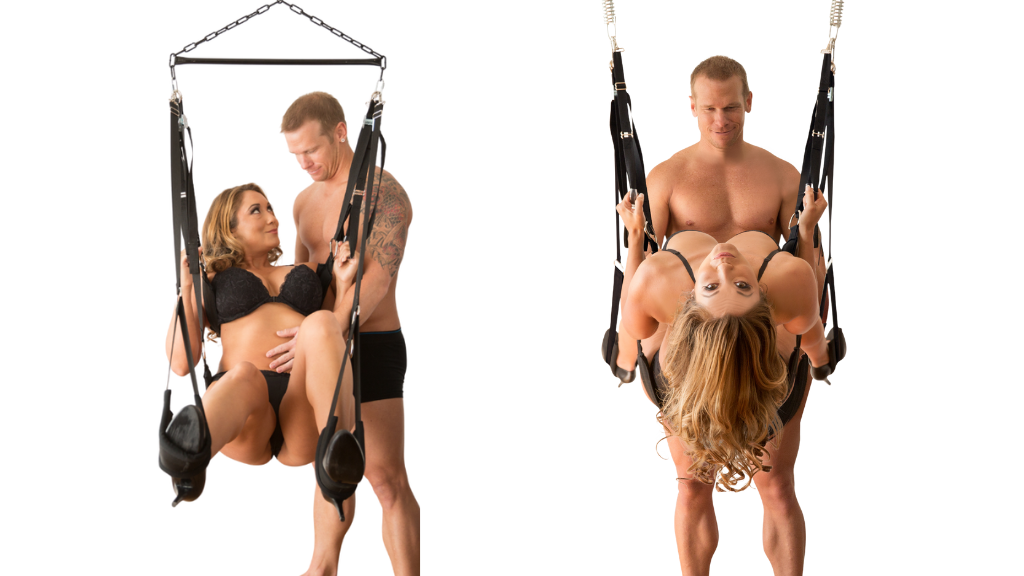
Everything else on this page is just the detail behind those two sentences.
Side by Side
| Screamer Twist | Screamer Dual Hook | |
| Mounting points | Single ceiling hook | Two ceiling hooks |
| Rotation / spin | Yes, 360 degrees | No |
| Width | Fixed by spreader bar | Set at installation |
| Seat strap | 4-inch padded webbing | 4-inch padded webbing |
| Headrest | Included | Included |
| Spring | Drawbar spring included | Drawbar spring included |
| Stand compatible | Yes | Yes (built for dual) |
| Overhead bar conversion | Not needed | Yes, converts to one hook |
| Best for | Rotation, variety, first Screamer | Comfort, wider fit, long sessions |
Why Dual Hook Exists
Most swings on the market are single-hook. One ceiling point, a spreader bar across the top holding the straps apart at a fixed width. Simple, proven, works fine.
The problem is the spreader bar. Most are 17 to 19 inches wide. That width concentrates load on the inner thighs and hip bones. For someone with curves or a fuller figure, that’s not a minor annoyance: it’s the reason swings end up in closets.
A dual-hook setup removes the spreader bar entirely. The two ceiling points take the place of the bar, and the width between them is set at installation. You can go 28 inches. 32 inches. 36 inches. Wider than any fixed spreader bar allows.
The Screamer Dual Hook was built around that idea. The design decision was deliberate: comfort was the priority, and a narrow spreader bar is a comfort failure by design.
| “I found most swings that are available are for small body types. I like plus size ladies and wanted comfort while enjoying her in ways you can only imagine. The Dual Hook Sex Swing was my answer.” — James Maddox, age 70, verified buyer |
The Spin Question
People ask whether they can make the Screamer Dual Hook rotate. The answer is no. Two mounting points hold the swing in place. That’s the point.
The Twist uses a single mounting point with a swivel built into the spring assembly. The seat can rotate freely. Positions that use rotation, entry from different angles, and movement during use all open up when the swing can spin.
For about 95% of what most people are going to use a swing for, rotation doesn’t come into it. The positions that use it are specific. If that’s on your list, the Twist is the right call. If it isn’t, the fixed position of the Dual Hook is not a limitation: it’s a stable platform.
One Hook or Two: The Mounting Question
The Dual Hook needs two ceiling points, spaced 28 to 36 inches apart. That’s most people’s situation when they’re drilling new hardware. Two lag bolts into a joist, done.
If you already have one hook installed and don’t want to add a second, the Twist hangs from it as-is. Nothing changes about your existing setup.
There’s a third option worth knowing: the 32-inch overhead bar. It’s a steel bar that mounts to a single ceiling point and creates two hook positions along its length. If you have one hook and want to run the Dual Hook from it, the overhead bar handles the conversion. Same single-hook ceiling installation, dual-hook swing experience.
If You’re Using the Screamer Stand
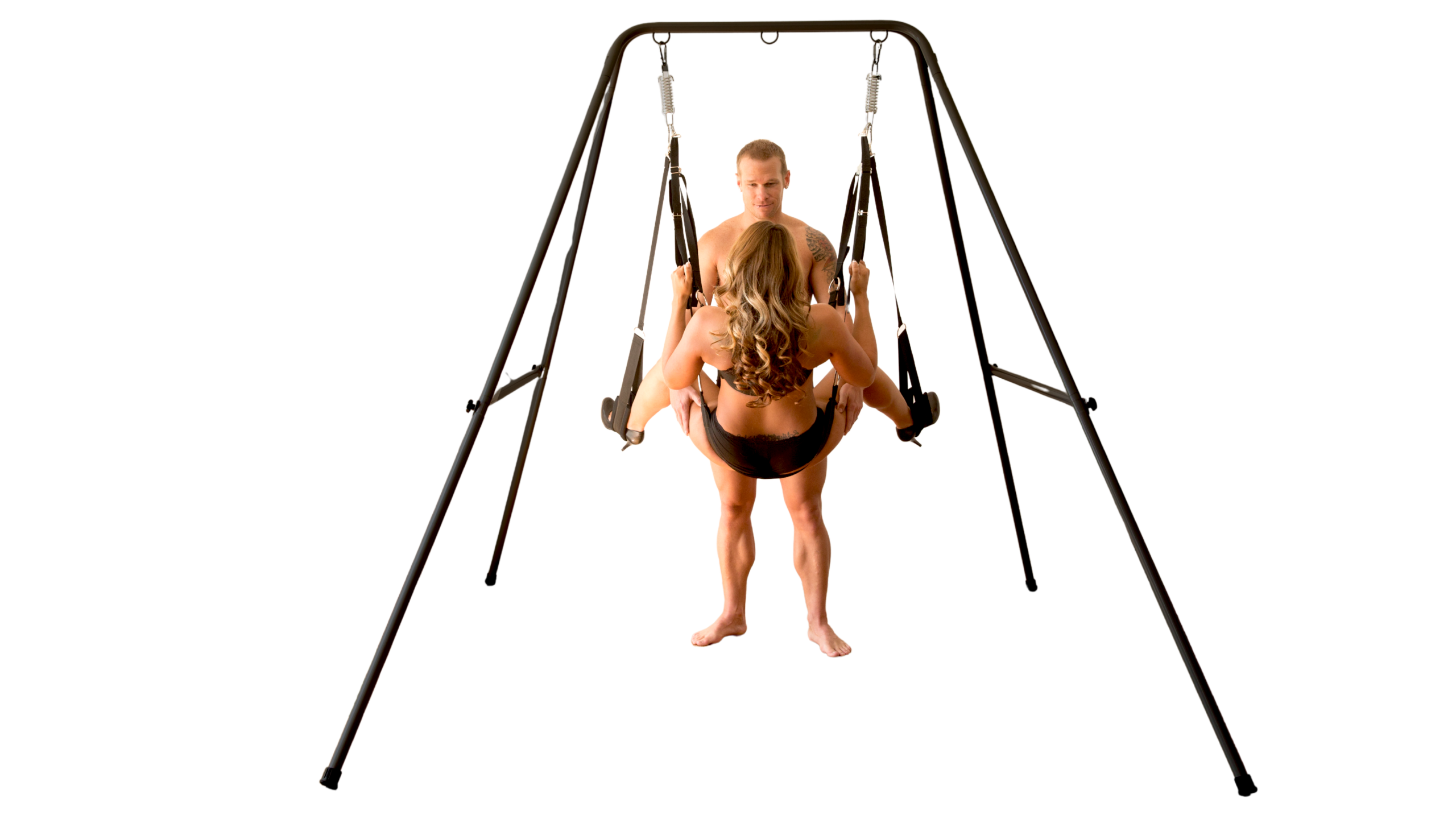
The Screamer Stand has three mounting points: one at the top center and one on each side arm. It supports both swing configurations.
The Twist hangs from the center point. The Dual Hook uses the two side arm points. The Stand was designed with dual-hook use as the primary case, so the side arm spacing is already set for the Dual Hook’s ideal width.
Either way, the Stand stores in a bag, requires no drilling, and breaks down completely. If you rent, or you want the option to move it, the Stand works for both.
The Decision Guide
| If this describes you… | The answer is… |
| You want the swing to spin and rotate | Screamer Twist |
| You have one ceiling hook already installed | Screamer Twist, or Dual Hook with overhead bar |
| Wider fit is a priority: curves, fuller figure, or comfort over long sessions | Screamer Dual Hook |
| You have two hooks or are drilling new ones | Screamer Dual Hook |
| You rent and are using the Screamer Stand | Either. The Stand supports both. Dual Hook is what it was built for. |
| You want the most position variety | Screamer Twist (adds rotation to the position list) |
| You already know a swing works for you and want the most comfortable option | Screamer Dual Hook |
If you’re still not sure: the Dual Hook is the more popular choice. Most people who have used a swing before know that comfort is what determines how often they actually use it. The Twist adds something specific. The Dual Hook does the core thing better.

